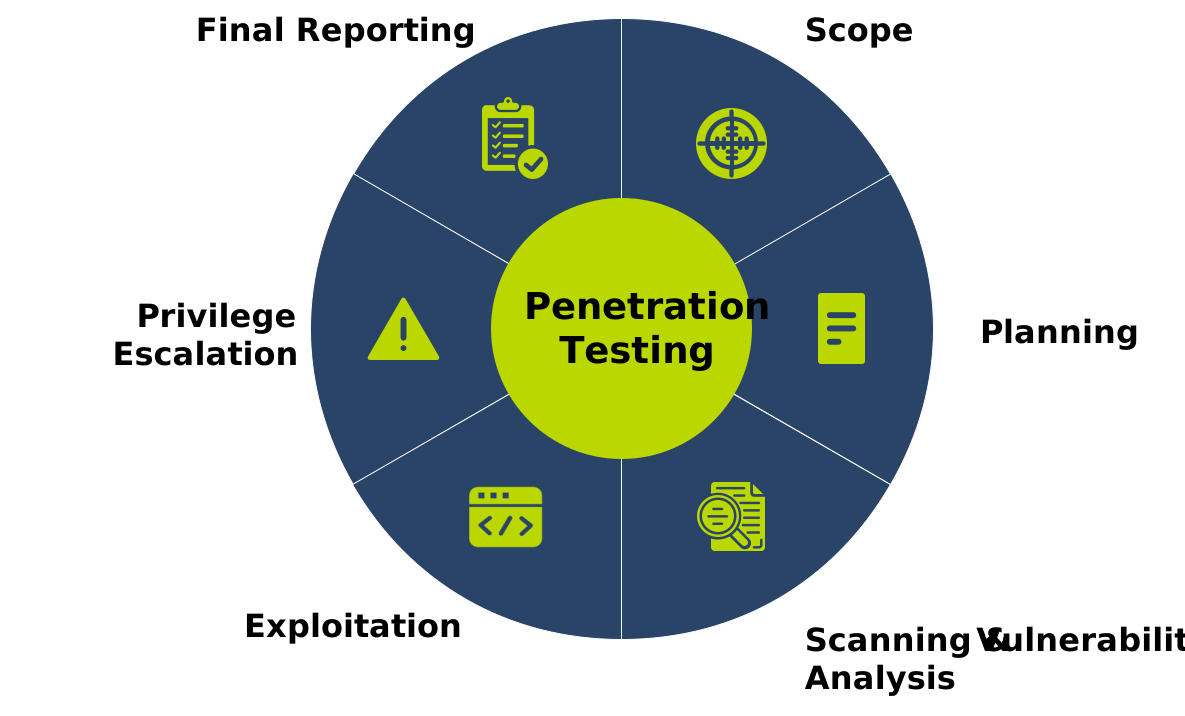
Penetration testing is a controlled security assessment that simulates
real-world attacks to identify vulnerabilities before malicious actors
exploit them. A proper test follows a structured methodology—not random
tool execution.
This article explains a practical penetration testing methodology used
by professional security teams, consultancies, and internal red teams.
What Is Penetration Testing?
Penetration testing (pentesting) is an authorized attempt to evaluate the
security of systems, networks, and applications by safely exploiting
vulnerabilities to understand real-world risk and impact.
Why a Methodology Matters
Without a defined methodology, penetration testing becomes incomplete,
inconsistent, and unreliable. Structured approaches ensure coverage,
repeatability, and defensible results.
Methodology-driven testing also separates professional penetration testing
from basic automated vulnerability scanning.
Penetration Testing Phases
Phase 1: Pre-Engagement & Scope Definition
Define target assets, testing boundaries, allowed techniques, timelines, and communication channels before testing begins.
Define target assets, testing boundaries, allowed techniques, timelines, and communication channels before testing begins.
Phase 2: Reconnaissance & Information Gathering
Collect intelligence on domains, IP ranges, technologies, APIs, exposed services, and employees using passive and active techniques.
Collect intelligence on domains, IP ranges, technologies, APIs, exposed services, and employees using passive and active techniques.
Phase 3: Scanning & Enumeration
Identify live hosts, open ports, services, and configurations to accurately map the attack surface without exploitation.
Identify live hosts, open ports, services, and configurations to accurately map the attack surface without exploitation.
Phase 4: Vulnerability Analysis
Analyze identified components for known vulnerabilities, misconfigurations, and logic flaws—many of which scanners miss.
Analyze identified components for known vulnerabilities, misconfigurations, and logic flaws—many of which scanners miss.
Phase 5: Exploitation
Safely exploit vulnerabilities to confirm impact while avoiding unnecessary disruption or data loss.
Safely exploit vulnerabilities to confirm impact while avoiding unnecessary disruption or data loss.
Phase 6: Post-Exploitation
Assess privilege escalation, lateral movement, persistence, and access to sensitive data to measure true business impact.
Assess privilege escalation, lateral movement, persistence, and access to sensitive data to measure true business impact.
Phase 7: Risk Analysis & Impact Assessment
Prioritize findings based on exploitability, impact, and likelihood, ensuring remediation efforts focus on real risk.
Prioritize findings based on exploitability, impact, and likelihood, ensuring remediation efforts focus on real risk.
Phase 8: Reporting & Documentation
Document findings clearly, explaining what was found, how it was exploited, why it matters, and how to fix it.
Document findings clearly, explaining what was found, how it was exploited, why it matters, and how to fix it.
Phase 9: Remediation Support & Retesting
Validate fixes through retesting and ensure no new vulnerabilities were introduced during remediation.
Validate fixes through retesting and ensure no new vulnerabilities were introduced during remediation.
Common Penetration Testing Mistakes
Common mistakes include overreliance on automated tools, ignoring
business logic flaws, poor reporting quality, and weak communication
with stakeholders.
Penetration Testing vs Vulnerability Scanning
Vulnerability scanning identifies potential weaknesses, while
penetration testing validates real-world exploitability and impact.
Both serve different but complementary roles.
Conclusion
A well-defined penetration testing methodology transforms testing
from a checklist exercise into a strategic risk evaluation, providing
organizations with meaningful insight into their true security posture through professional VAPT engagement.
Need a Professional Penetration Test?
Identify real-world risks with structured, methodology-driven security testing.
Request Penetration Testing